-
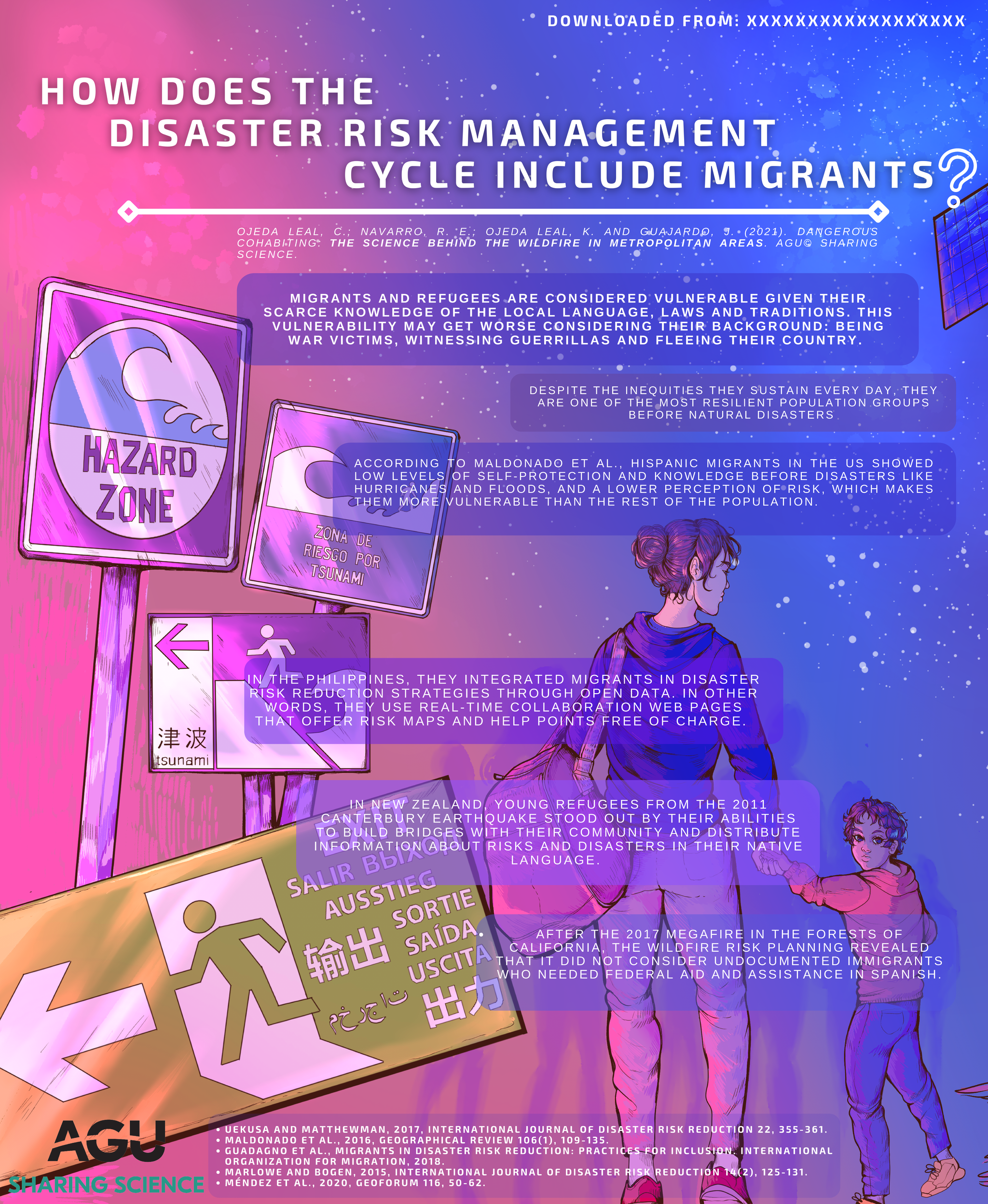
Migrants and refugees are considered vulnerable given their scarce knowledge of the local language, laws and traditions. This vulnerability may get worse considering their background: being war victims, witnessing guerrillas and fleeing their country.
-
Despite the inequities they sustain every day, they are one of the most resilient population groups before natural disasters.
-
According to Maldonado et al., hispanic migrants in the US showed low levels of self-protection and knowledge before disasters like hurricanes and floods, and a lower perception of risk, which makes them more vulnerable than the rest of the population.
-
In the Philippines, they integrated migrants in disaster risk reduction strategies through open data. In other words, they use real-time collaboration web pages that offer risk maps and help points free of charge.
-
In New Zealand, young refugees from the 2011 Canterbury earthquake stood out by their abilities to build bridges with their community and distribute information about risks and disasters in their native language.
-
After the 2017 megafire in the forests of California, the wildfire risk planning revealed that it did not consider undocumented immigrants who needed federal aid and assistance in Spanish.
References
- Uekusa and Matthewman, 2017, International Journal of Disaster Risk Reduction 22, 355-361.
- Maldonado et al., 2016, Geographical Review 106(1), 109-135.
- Guadagno et al., Migrants in Disaster Risk Reduction: Practices for Inclusion. International Organization for Migration, 2018.
- Marlowe and Bogen, 2015, International Journal of Disaster Risk Reduction 14(2), 125-131.
- Méndez et al., 2020, Geoforum 116, 50-62.
Download
Download this infographic as PDF: PG4.pdf