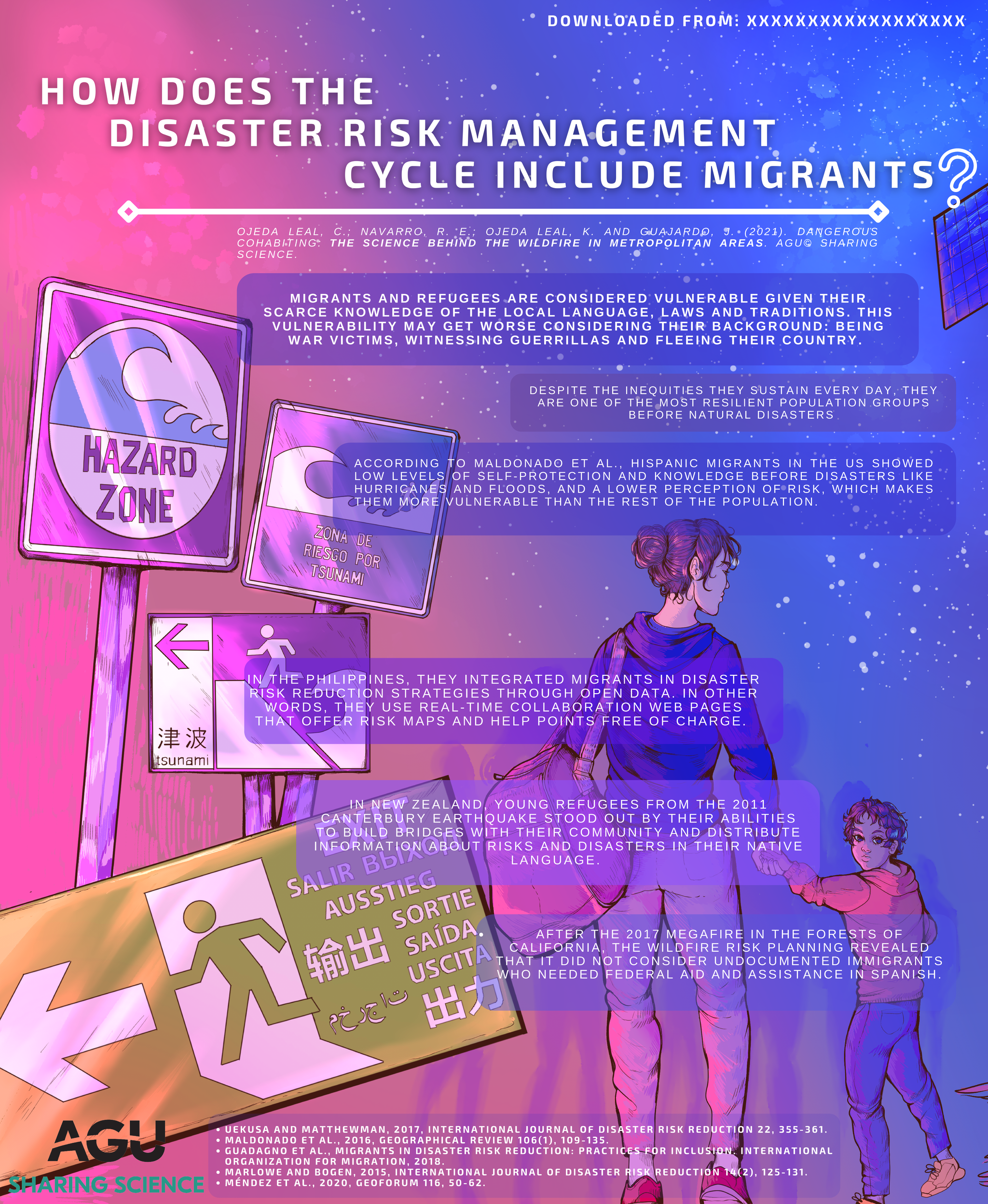
Conscious efforts to include (disabled) people with different abilities have not been made in socio-natural disaster risk management studies. On top of that, this overlooks the UN mandate which states that the nations must have a vision of these risks based on human rights.
Sendai Framework for Disaster Risk Reduction 2015-2030 (SFDRR) explicitly says that all member nations must incorporate certain principles in the planning of prevention measures as well as the processes of evacuation: accessibility, inclusion and universal design.
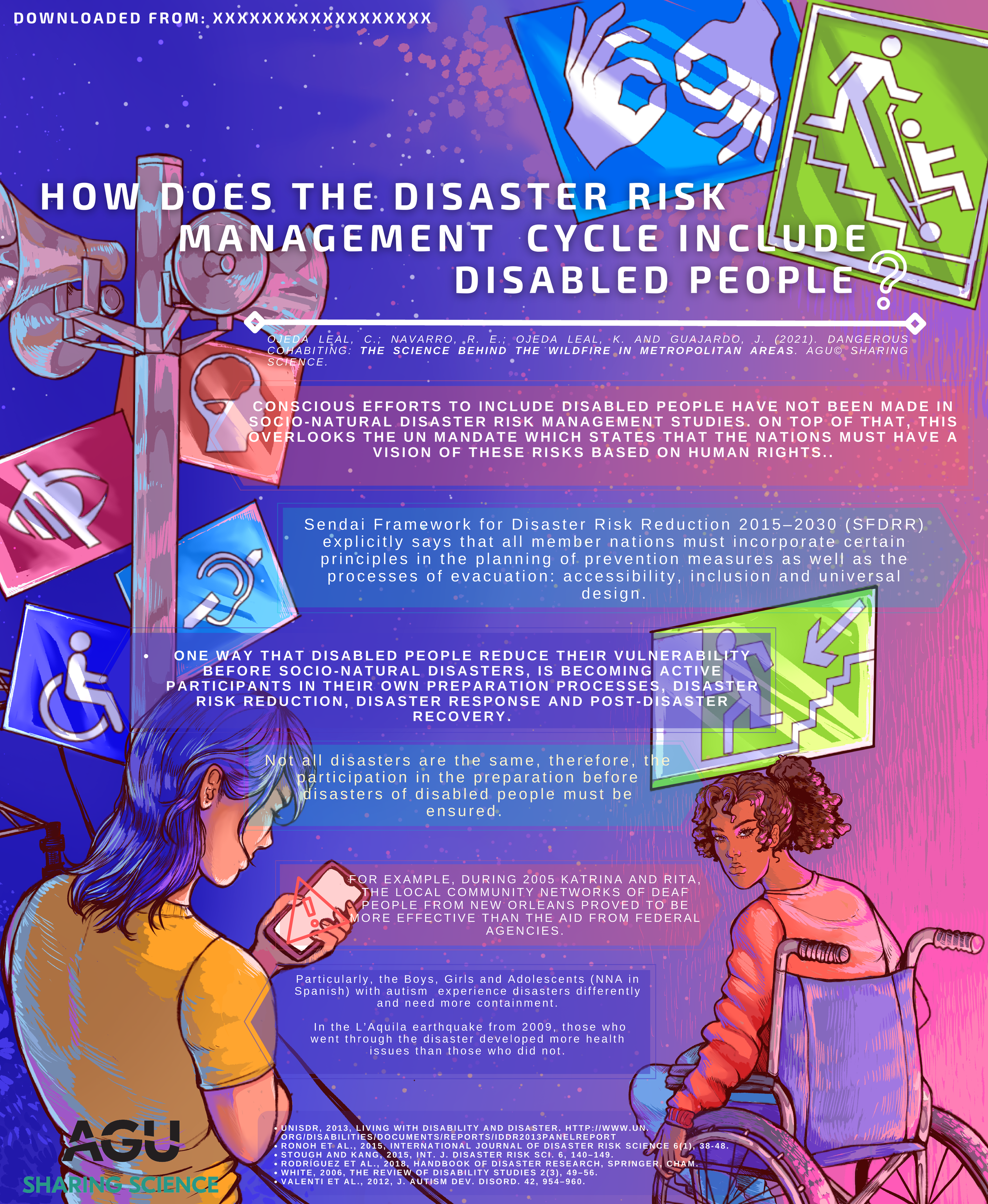
Migrants and refugees are considered vulnerable given their scarce knowledge of the local language, laws and traditions. This vulnerability may get worse considering their background: being war victims, witnessing guerrillas and fleeing their country.
Despite the inequities they sustain every day, they are one of the most resilient population groups before natural disasters.
According to Maldonado et al., hispanic migrants in the US showed low levels of self-protection and knowledge before disasters like hurricanes and floods, and a lower perception of risk, which makes them more vulnerable than the rest of the population.